A frightening account warning can turn into a payment instruction so smoothly that the two feel like one task. First, someone claims to have found a problem. Then the same person offers a solution: send funds elsewhere, withdraw cash, buy cryptocurrency, or hand money to a courier. The proposed movement is the point where a story about protection becomes a request to give up control of money.
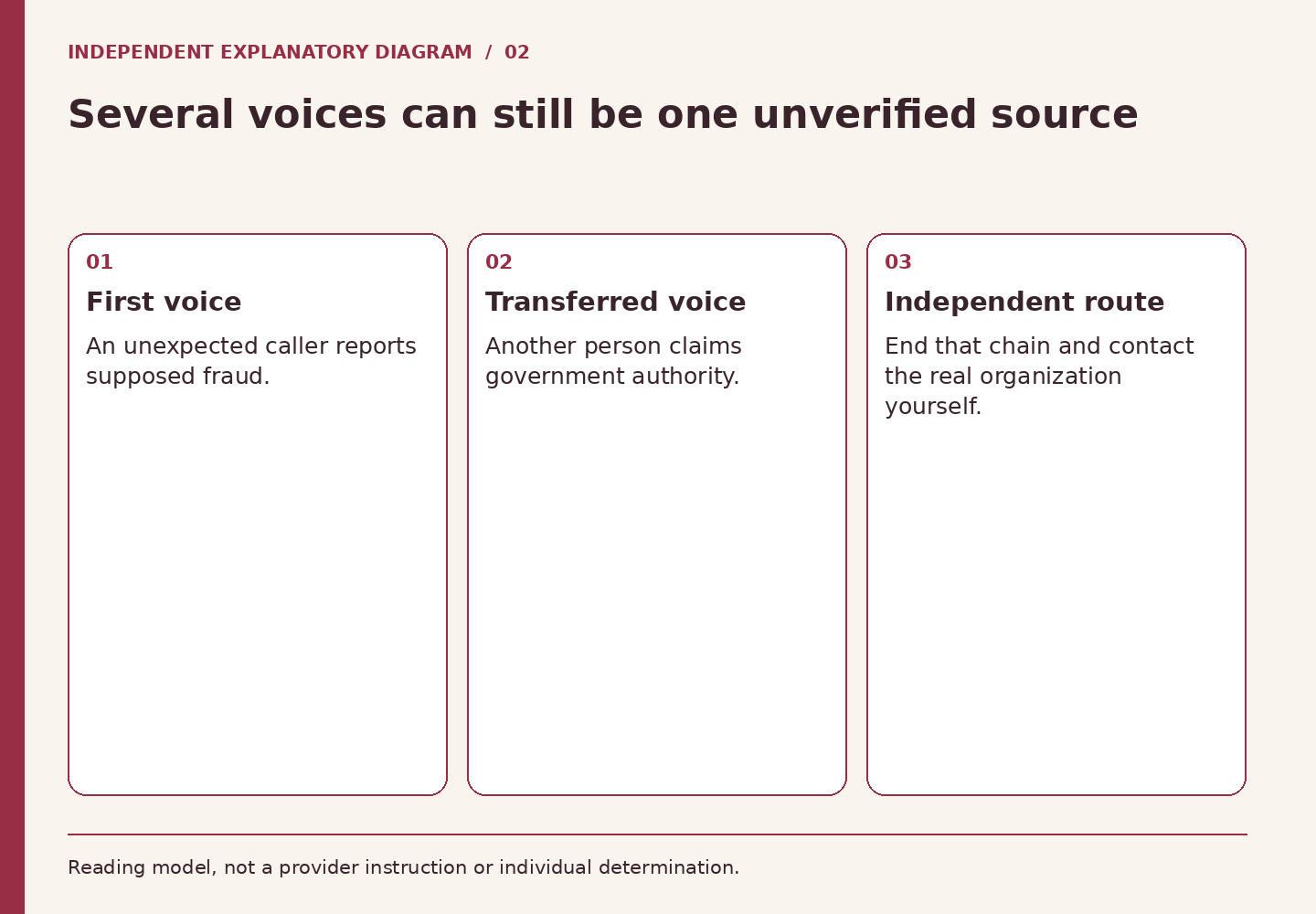
The FTC describes this staged impersonation pattern, including transfers to supposed government helpers. These are general scam patterns, not claims about a specific Corpay feature or an actual caller. Do not move funds in response to an unexpected protection story. Independently contact the responsible financial provider if you are concerned.
Look at the destination, not the reassurance
Words such as safe, temporary, reserve and investigation do not establish who controls an account. A receipt does not make a payment reversible. A promise to return the money after a security check does not change the immediate action being requested. You are being asked to act now based on someone else’s explanation of an unseen process.
An original decision question is: “Would I make this payment if the caller had not frightened me first?” That question is not a legal test, and a yes answer does not authenticate anything. Its purpose is to reveal how the payment became connected to the warning. You may discover that you never wanted a new transaction at all; you wanted information about the account you already use.
Transfers between voices do not establish authority
In a fictional example, the first caller claims to work for a payroll-card provider. A second voice says they investigate federal financial crimes. A third sends an image of a badge. Each additional element appears to support the others, but all came from the same unverified interaction. Count independent sources, not the number of people who repeat the story.
End the conversation and begin a new one using contact information already associated with the real provider. Do not accept the suspicious caller’s instructions for what to tell genuine support. A coached description such as “I am paying a relative” can obscure the very facts the provider needs to understand your concern. Use your own words, including that someone pressured or misled you.
If you have started, report what actually happened
If money has moved, tell the payment provider immediately and ask what can be done. Do not wait for a complete timeline, a screenshot collection, or this site’s reading card. Be clear about whether you initiated the transaction after being deceived or whether someone accessed the account without permission. Those facts matter; a general article cannot determine liability or promise reimbursement.
Keep future steps tied to independently verified instructions. A person who promises to retrieve the money for an upfront fee may be introducing another scam. You do not need to pay again to demonstrate cooperation with an investigation. Continue with recovery offers after a loss and the different purposes of reporting. The useful outcome is restored decision space and prompt official contact, not winning an argument with an impersonator.
Sources and reading boundaries
Sources checked October 7, 2026. This is a review date, not a policy effective date or an account test.
- FTC: How Scammers Try To Steal Your Life Savings: Scammers redirect money under a protection story; no claim about card-specific transfer functions. Review basis: Official source text reviewed through search-index retrieval; direct navigation may be unavailable.
- FTC: What To Do if You Were Scammed: Prompt payment-provider contact and recovery requests, account and identity recovery routes. No promise of reimbursement. Review basis: Official source text reviewed through search-index retrieval; direct navigation may be unavailable.