Someone sends more than expected and asks you to return the difference. The story may involve a job, an online sale, a refund or a favor. Because a deposited amount appears available, sending some onward can seem fair. The important question is whether the original payment is genuine, not whether the account display currently lets you spend an amount.
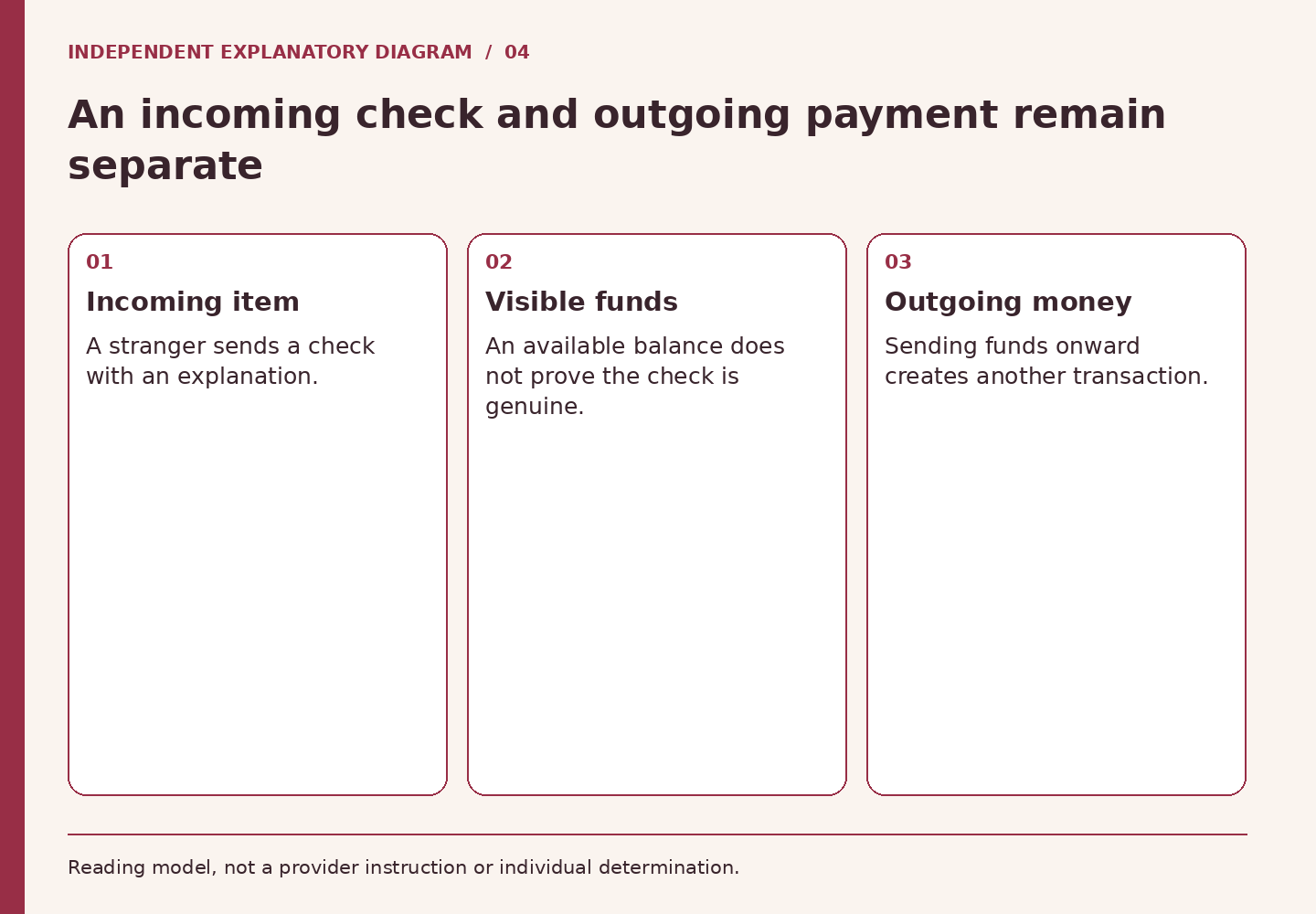
The FTC explains that funds availability does not prove a check is good. A fake check can be identified later, after money has been sent elsewhere. This article describes a general scam pattern. It does not claim that a particular payroll-card program supports check deposits or determine what an individual institution will do.
Draw two separate events
Use a simple mental diagram: incoming check, then outgoing payment. The sender wants you to connect them as one correction. They remain different events. The second may send your own usable money to a recipient even if the first later fails. A screenshot, emailed receipt or reassuring message from the sender cannot resolve that difference.
In a fictional example, a person selling a bicycle receives a check for more than the agreed price. The buyer asks for the extra amount to be sent to a mover. The seller is no longer merely accepting payment for a bicycle. They are being asked to transfer funds to someone whose relationship to the buyer is also unverified. The safer move is to stop rather than improvise a correction.
Do not test the story with a smaller transfer
Sending a small amount first does not make the rest safe. It can encourage further contact and establish that you are willing to follow the payment instructions. Nor does waiting a number of days chosen by the stranger establish that a check is genuine. Ask the actual financial institution about the specific deposited item and concern; do not rely on a universal waiting period supplied by an article or caller.
Keep the original transaction’s purpose in view. A buyer should not need you to solve their payroll, shipping or accounting problem by sending separate funds to an unfamiliar party. A prospective employer should not need a job applicant to return part of a deposited check or buy gift cards for a supposed equipment arrangement. A complicated explanation is still an explanation, rather than verification.
If the deposit or onward payment already happened
Contact the institution handling the check and the service used for any outgoing payment promptly. Explain both parts honestly, including the sender’s instructions. Ask how to handle the disputed deposit and whether the outgoing payment can be stopped or recovered. Do not try to make the account look correct by sending more money or accepting another check from the same person.
Retain records already available without reopening suspicious attachments. You can note the promised purpose, requested recipient and approximate sequence after urgent contact. The goal is to give the genuine provider enough context to advise on its process, not to investigate the sender yourself. Read job-offer payment pressure for the hiring version and recovery offers if someone proposes a paid fix. No result is guaranteed, but acting promptly is more useful than waiting for the sender’s reassurance.
Sources and reading boundaries
Sources checked October 7, 2026. This is a review date, not a policy effective date or an account test.
- FTC: Fake Check Scams: Available deposited funds do not prove a check is genuine; overpayment and onward-payment patterns. Review basis: Official source text reviewed through search-index retrieval; direct navigation may be unavailable.
- FTC: What To Do if You Were Scammed: Prompt payment-provider contact and recovery requests, account and identity recovery routes. No promise of reimbursement. Review basis: Official source text reviewed through search-index retrieval; direct navigation may be unavailable.